
Choosing the right Sealing Compound in 2026 requires more than comparing prices or reading supplier brochures. Global buyers must examine movement, temperature, moisture, chemical exposure, curing time, and surface compatibility. A product that performs well on a dry indoor joint may fail beside a vibrating machine or a sun-heated façade.
Dr. R. Bruce Prime, a respected adhesives and sealants authority, offered a practical reminder: “The best material is the one that fits the application.” That principle remains valuable for silicone, polyurethane, polysulfide, acrylic, butyl, and hybrid technologies. Each type has a different balance of elasticity, adhesion, durability, processing speed, and cost. Buyers should also review technical data sheets, batch consistency, shelf life, packaging quality, and independent test evidence. Small details matter. A leaking cartridge can damage an entire shipment.
This guide examines the best Sealing Compound types for global purchasing decisions in 2026. It connects material chemistry with real operating conditions, including cold warehouses, humid ports, dusty construction sites, and long-distance transport. Standards and regional requirements should be checked before approval. Supplier claims are useful, but they are not proof.
Testing is still essential.
A simple adhesion test may expose poor surface preparation. A short aging trial may reveal color change, cracking, or weak recovery. This overview cannot replace project-specific validation, and that limitation deserves attention. The most expensive mistake is not always buying a costly compound. Sometimes, it is choosing a convenient product without understanding the joint.
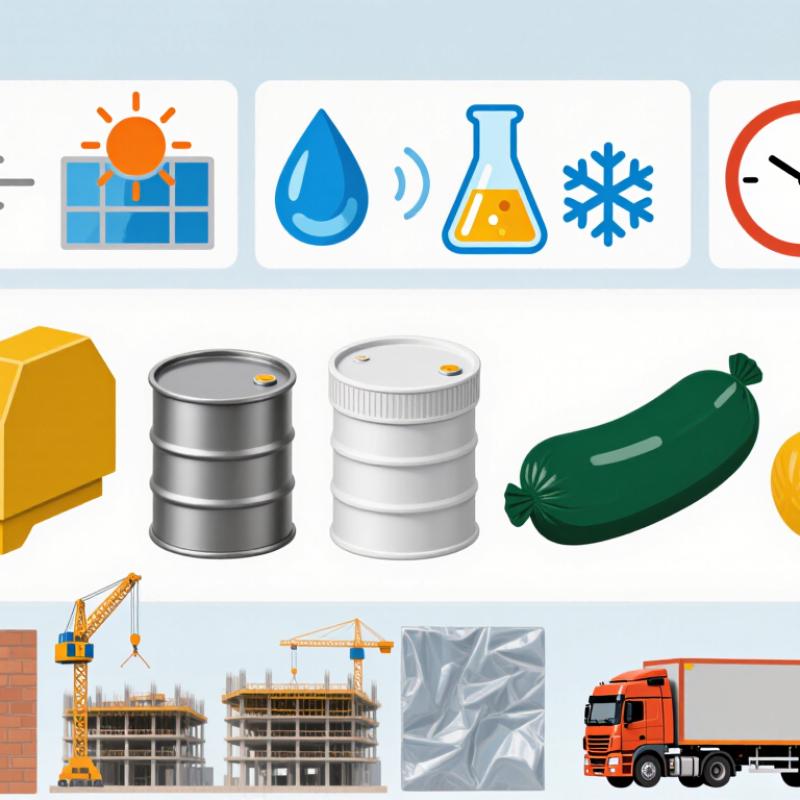
Sealing compounds fill joints, gaps, and interfaces where materials move, vibrate, or meet moisture. Common types include silicone, polyurethane, polysulfide, acrylic, and hybrid polymers. Each behaves differently under heat, sunlight, chemicals, and repeated movement. Silicone handles ultraviolet exposure well. Polyurethane usually offers stronger abrasion resistance. Polysulfide remains useful in fuel-resistant and insulating applications. The best choice depends on the joint, not simply the product label.
Grand View Research estimated the global sealants market at about USD 78 billion in 2023. Its analysis also forecasts continued growth through 2030. The UN Environment Programme reports that buildings consume roughly 30% of global final energy. Poorly sealed windows, façades, and service penetrations can increase drafts and moisture damage. Small gaps matter. Yet sealing compounds are not magic; poor surface preparation can defeat an expensive specification. I have seen clean-looking joints fail because installers ignored movement and curing conditions.
Tips: Check substrate compatibility, joint movement, service temperature, and cure time. Request technical data sheets and independent test evidence. Confirm performance after aging, not only after laboratory application. A lower purchase price can become costly when repairs, leakage, or downtime follow. Regional climate also matters. A compound suited to a dry warehouse may perform poorly beside a humid coastline. In 2026, buyers should assess lifecycle reliability, installation safety, and documented environmental information rather than marketing claims alone.
| Sealing Compound Type | Primary Chemistry | Typical Operating Temperature | Typical Pressure Capability | Curing or Drying Behavior | Main Strengths | Common Limitations | Typical Applications | 2026 Buyer Relevance | Overall Selection Rating |
|---|---|---|---|---|---|---|---|---|---|
| Anaerobic Thread and Flange Sealant | Methacrylate resin that cures in the absence of oxygen when confined between close-fitting metal surfaces. | Approximately -55°C to 150°C; some specialized formulations reach higher temperatures. | Suitable for many high-pressure threaded and close-fitting metal joints when correctly selected and cured. | Remains liquid in air and cures after assembly between metal surfaces. Cure speed depends on temperature, gap, and metal type. | Excellent vibration resistance; prevents leakage through threaded paths; replaces some traditional tapes and pastes; good resistance to many oils and hydraulic fluids. | Generally unsuitable for large gaps, porous materials, oxygen-rich exposed films, and many plastic assemblies. | Hydraulic and pneumatic fittings, pipe threads, metal flanges, pumps, valves, and industrial machinery. | Strong choice where leak prevention, vibration resistance, and compact assembly are priorities. | ★★★★★ |
| RTV Silicone Sealant | Room-temperature-vulcanizing silicone elastomer; commonly available in acetoxy, neutral, and oxime or alkoxy cure systems. | Approximately -60°C to 200°C; specialty grades may operate beyond this range. | Best for low-to-moderate pressure sealing and environmental protection rather than extreme internal pressure. | Moisture-cured at room temperature. Skin formation occurs before full cure, and cure depth depends on humidity and joint geometry. | Wide temperature range; good weathering and UV resistance; flexible; suitable for many dissimilar materials; excellent outdoor performance. | Lower mechanical strength than many rigid sealants; some cure chemistries can corrode sensitive metals; cure may be slow in deep or enclosed joints. | Industrial covers, electrical enclosures, appliance joints, glazing, HVAC components, engine covers, and outdoor equipment. | Highly relevant for climate exposure, thermal cycling, flexible joints, and long service life in outdoor equipment. | ★★★★★ |
| MS Polymer or SMP Sealant | Moisture-curing silyl-modified polymer, also called silane-modified polymer. | Approximately -40°C to 100°C; selected formulations may tolerate higher intermittent temperatures. | Generally suitable for low-to-moderate pressure joints and weatherproofing applications. | Moisture-cured at room temperature; typically forms a flexible elastomer without the need for solvent evaporation. | Good adhesion to many substrates; low odor; paintability is often better than with silicone; good flexibility and weather resistance; commonly available in solvent-free versions. | Usually less suitable than high-temperature silicone or specialty sealants for continuous high-heat service; performance varies significantly by formulation. | Construction joints, façades, transportation bodies, roofing details, panel bonding, and general industrial sealing. | Increasingly attractive where buyers require lower emissions, broad substrate compatibility, and paintable flexible sealing. | ★★★★★ |
| Polyurethane Sealant | Moisture-curing polyurethane elastomer, available in one-component and two-component systems. | Approximately -40°C to 90°C; certain formulations offer higher short-term temperature resistance. | Suitable for low-to-moderate pressure sealing and some demanding structural or semi-structural joints. | One-component grades cure with atmospheric moisture; two-component grades cure after mixing and are less dependent on ambient humidity. | High mechanical strength; strong adhesion; good abrasion resistance; accommodates joint movement; useful for bonding and sealing. | Some grades have limited resistance to prolonged UV exposure, moisture, or high temperatures; moisture sensitivity can affect storage and application. | Automotive bodies, trailers, flooring, concrete joints, industrial panels, and transportation equipment. | Useful where durability, movement capability, and mechanical adhesion are more important than maximum heat resistance. | ★★★★☆ |
| Polysulfide Sealant | Polysulfide elastomer, supplied as one-component or multi-component curing systems. | Approximately -55°C to 120°C, depending on formulation and exposure conditions. | Suitable for fuel, water, and weatherproof sealing in many low-to-moderate pressure applications. | Two-component systems cure after mixing; one-component systems cure through moisture or oxidation, depending on formulation. | Excellent resistance to fuels, oils, water, and weathering; good flexibility; long-established performance in aerospace and building joints. | Often has a slower cure and stronger odor than some newer chemistries; lower resistance to prolonged high heat than many silicone systems. | Fuel tanks, aircraft joints, insulating glass, concrete expansion joints, and marine structures. | Important for fuel-contact and high-weathering applications where chemical resistance is a primary requirement. | ★★★★☆ |
| Epoxy-Based Sealing Compound | Thermosetting epoxy resin cured with amine, anhydride, or other hardener systems; may be liquid, paste, or filled compound. | Approximately -50°C to 150°C; specialty systems can operate at higher temperatures. | Can provide high-strength sealing for static joints and encapsulation, subject to joint design and formulation. | Two-component chemical cure; cure speed depends on mix ratio, temperature, and product formulation. | High strength; excellent adhesion; good chemical resistance; low shrinkage; suitable for gap filling and encapsulation. | Usually rigid after cure; limited movement accommodation; careful proportioning and mixing are required; removal can be difficult. | Electrical encapsulation, metal repair, machinery housings, composite components, and static structural joints. | Valuable for rigid, chemically resistant, and high-strength sealing where joint movement is minimal. | ★★★★☆ |
| Acrylic or Methacrylate Sealant | Acrylic or methacrylate polymer systems, including reactive adhesives and sealants. | Approximately -40°C to 120°C; temperature capability is formulation-specific. | Commonly used for low-to-moderate pressure sealing, bonding, and gap filling. | May cure by anaerobic reaction, activator, light, heat, or two-component chemical reaction. | Fast cure options; good adhesion to selected plastics and metals; useful for automated assembly and high-throughput production. | Some systems have noticeable odor or shrinkage; UV or oxygen inhibition may affect exposed surfaces; substrate compatibility must be verified. | Electronics, appliances, display assemblies, automotive components, and industrial assembly lines. | Relevant where rapid processing, automation, and controlled production-cycle time are key purchasing factors. | ★★★★☆ |
| Butyl Rubber Sealant | Butyl rubber or polyisobutylene-based compound, supplied as non-curing, pressure-sensitive, tape, or hot-melt forms. | Approximately -40°C to 90°C; continuous high-temperature capability is generally limited. | Suitable for low-pressure weather, vapor, and water sealing rather than high-pressure fluid containment. | Many grades remain permanently tacky or plastically deformable instead of fully curing. | Very low water and vapor permeability; good weather resistance; easy application; effective for removable or compressive seals. | Can creep under heat or sustained load; limited resistance to solvents and high temperatures; may attract dust when exposed. | Roofing, window glazing, vapor barriers, vehicle body seams, ducts, and removable panel seals. | Useful for energy-efficient buildings and moisture control, especially where a non-curing seal is preferred. | ★★★☆☆ |
| Acrylic Latex or Water-Based Sealant | Water-based acrylic or vinyl-acrylic dispersion with fillers and additives. | Approximately -20°C to 80°C, depending on formulation and exposure. | Generally intended for low-pressure air, dust, and water sealing in protected joints. | Dries primarily through water evaporation; drying depends on temperature, humidity, joint size, and ventilation. | Low odor; easy cleanup while wet; often paintable; suitable for interior construction and maintenance work. | Lower water, movement, and weather resistance than many silicone, polyurethane, or SMP systems; unsuitable for permanently wet or highly dynamic joints unless specifically rated. | Interior trim, drywall, masonry cracks, door and window frames, and general building maintenance. | Attractive where low emissions, easy handling, and economical interior sealing are more important than extreme durability. | ★★★☆☆ |
| High-Temperature Ceramic or Inorganic Sealant | Inorganic silicate, ceramic, phosphate, or refractory-filled systems designed for elevated-temperature service. | Approximately 500°C to above 1,000°C for selected formulations; capability depends on atmosphere and mechanical loading. | Usually intended for static, low-pressure sealing or joint protection rather than flexible pressure containment. | May cure through drying, chemical reaction, or heat activation; some systems require controlled heating before service. | Exceptional heat resistance; nonflammable or low-flammability characteristics in many formulations; suitable for furnaces and exhaust systems. | Typically rigid and brittle; poor tolerance for vibration and joint movement; substrate preparation and thermal conditioning can be critical. | Furnaces, boilers, kilns, exhaust systems, fire-resistant assemblies, and high-temperature equipment. | Essential for specialized thermal applications where organic sealants cannot withstand service temperatures. | ★★★☆☆ |
| Graphite-Based Packing or Sealant Compound | Flexible graphite, often combined with binders, fibers, or reinforcement for static and dynamic sealing. | Commonly suitable from cryogenic service to approximately 450°C in air; higher temperatures may be possible in controlled, oxygen-limited environments. | Used in industrial valves, flanges, and packing systems for moderate-to-high pressure service when correctly engineered. | Does not cure like a liquid polymer; forms a compressed or mechanically retained sealing structure. | Excellent thermal stability; good resistance to many chemicals; suitable for steam and valve packing; can accommodate certain surface irregularities. | Oxidation can limit high-temperature performance; electrical conductivity and galvanic compatibility may require consideration; installation depends heavily on compression and hardware. | Steam systems, valves, pumps, heat exchangers, high-temperature flanges, and industrial packing assemblies. | Important for energy, process, and thermal systems requiring robust sealing across wide temperature ranges. | ★★★★☆ |
| PTFE-Based Paste or Thread Sealant | Polytetrafluoroethylene dispersion, paste, or compounded thread-sealing material. | Approximately -200°C to 260°C, depending on grade, pressure, and mechanical design. | Suitable for many threaded and static fluid connections when applied according to the sealing system requirements. | Typically non-curing; sealing is produced by filling surface irregularities and providing low-friction chemical resistance. | Excellent chemical resistance; very low friction; broad temperature capability; useful for aggressive media and clean-service applications. | Cold flow and creep can occur under sustained load; pure PTFE products may be unsuitable for certain dynamic or high-vibration joints without mechanical control. | Chemical processing, laboratory systems, water treatment, gas lines, and threaded pipe connections. | Strong option for chemically aggressive media and broad-temperature service, provided creep and pressure risks are controlled. | ★★★★☆ |
Selection priorities for global buyers in 2026 typically include operating temperature, media compatibility, joint movement, pressure, cure speed, regulatory requirements, volatile emissions, repairability, packaging stability, and total installed cost.