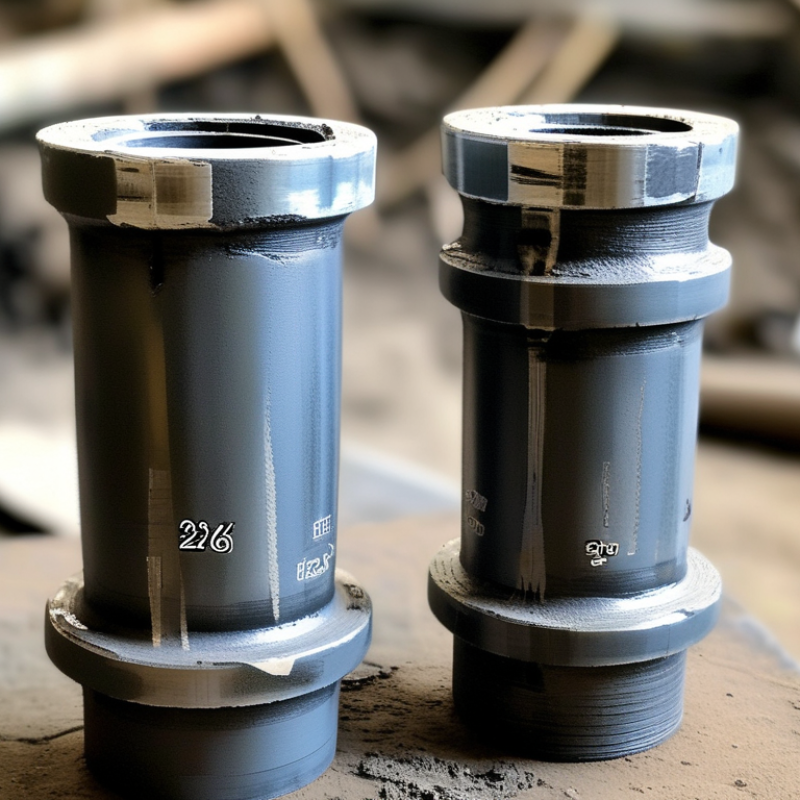
The 2026 Top Electrofusion Reducing Sleeve Types Guide examines a small fitting with major responsibilities. An Electrofusion Reducing Sleeve connects polyethylene pipes with different outside diameters. It also supports repairs, network extensions, and controlled transitions between existing pipe sections.
Selection should begin with measured pipe dimensions, not assumptions. Confirm the pipe grade, SDR rating, pressure class, and manufacturer’s compatibility data. A sleeve may look correct while remaining unsuitable for the actual pipe wall. As polyethylene joining specialist Dr. Ian Smith states, “A dependable electrofusion joint begins with disciplined preparation, not with the heating cycle.” This principle deserves attention.
Field work adds practical complications. Dirt may hide beneath a pipe surface. Oxidation can remain after careless cleaning. Misalignment may create stress inside the fitting. Proper installation requires accurate cutting, scraping, cleaning, clamping, and barcode-controlled fusion parameters. The joint must cool without movement. It must not be rushed.
Small details matter.
This guide compares reducer geometry, socket depth, pressure ratings, fusion indicators, and installation environments. It also considers manufacturer traceability and inspection records. Experienced technicians know that equipment quality cannot repair poor preparation. Still, even experienced teams make mistakes. That uncomfortable fact should shape training and verification procedures.
The best Electrofusion Reducing Sleeve is not simply the cheapest or largest option. It matches the pipe system, operating conditions, and installer capability. Readers should question catalogue claims, verify dimensions, and request current technical documentation. Reliable decisions come from evidence, repeatable procedures, and honest review of what happened in the field.
An electrofusion reducing sleeve is a polyethylene fitting that connects two pipes with different outside diameters. It creates a sealed transition without using threaded parts, solvents, or open flames. The sleeve contains embedded resistance wires. When controlled electrical current passes through them, the surrounding polyethylene softens and fuses with the prepared pipe surfaces.
In field work, I have found that preparation matters more than appearance. The larger and smaller pipes must match the sleeve’s specified dimensions and pressure class. Their ends should be cut square, scraped to remove oxidation, cleaned with approved materials, and kept dry. Even a thin layer of mud or moisture can weaken the joint. Alignment clamps help prevent movement during heating and cooling. The fitting should remain untouched until the cooling time ends.
A reducing sleeve is not a universal repair part. Its diameter range, wall thickness, fusion voltage, and cooling period require verification before installation. Follow the fitting data and applicable piping standards. Record the operator, fusion time, ambient conditions, and inspection result when traceability matters. I once underestimated pipe ovality, and the joint looked acceptable but needed correction. That experience remains useful: visual checks alone are not enough. A careful installer also checks scraping quality, cable connections, and machine calibration before energizing the fitting.
An electrofusion reducing sleeve is a polyethylene fitting used to join two PE pipes with different nominal outside diameters. Electrical resistance wires embedded in the fitting heat the pipe and sleeve surfaces, creating a permanent fusion joint when the correct voltage, heating time, cooling time, and pipe preparation procedures are followed.
The chart shows the outside-diameter difference in selected reducing sleeve size combinations. The values are calculated from the nominal pipe diameters shown on each fitting example. Actual availability, SDR compatibility, pressure rating, and fusion parameters depend on the applicable piping standard and manufacturer specifications.
Electrofusion reducing sleeves join two polyethylene pipes with different outside diameters. Their internal resistance wires create controlled heat when connected to an approved fusion unit. The heat softens the sleeve and pipe surfaces. Pressure then develops inside the joint as the melted layers bond together.
A proper connection depends on preparation, not only equipment. The pipe ends must be cut square, scraped to remove oxidation, cleaned, and kept dry. The sleeve should sit evenly on both pipes, with no visible gap or forced alignment. During heating, the wires transfer energy through the fitting wall. After fusion, clamps should hold the assembly still during the full cooling period. Moving it early may create a weak joint that looks acceptable. That is the difficult part.
Tips: Check pipe dimensions, SDR ratings, and fusion parameters before starting. Mark insertion depths with a clear pencil line. Avoid touching prepared surfaces with bare hands. Inspect the joint for uniform melt indicators and movement. A clean site matters more than speed. In cold or windy conditions, shielding may be necessary. Always follow the fitting manufacturer’s approved procedure and use trained personnel. Some crews still underestimate scraping depth, and that deserves another careful review.
Main Types of Electrofusion Reducing Sleeves
Electrofusion reducing sleeves connect polyethylene pipes with different outside diameters. The common type is the concentric reducing sleeve. Its centerline stays aligned, making it suitable for buried water, gas, and industrial networks. Eccentric reducing sleeves shift the centerline. They help maintain a level pipe bottom in drainage applications, where trapped fluid can create operational problems. Some projects also use short-pattern and long-pattern sleeves. Short sleeves save space, while longer bodies provide more insertion area and improved alignment.
The Plastics Pipe Institute notes that joint preparation strongly influences polyethylene fusion reliability. ASTM F1055 covers polyethylene electrofusion fittings, while ISO 4427-3 addresses fittings for water supply systems. Market data also shows continued demand. Grand View Research has reported steady growth in the global HDPE market, supported by water infrastructure and utility replacement projects. However, market growth does not guarantee installation quality. A sleeve may look perfect and still contain poor fusion contact.
Tips: Confirm pipe SDR, diameter, and pressure class before selection. Scrape the oxidation layer evenly. Keep the fusion zone dry and clean. Use a calibrated control box. Let the joint cool naturally. Do not move it early. Eccentric designs need extra checking because orientation errors are easy to miss. This small detail deserves more attention. In practice, preparation is often the weak point, not the fitting itself. Always verify the supplier’s technical data against the project standard.
| Type | Basic Configuration | Typical Size Arrangement | Primary Application | Main Advantages | Important Design or Installation Considerations | Common Reference Standards |
|---|---|---|---|---|---|---|
| Concentric Reducing Sleeve | A single fitting with two coaxial socket ends of different nominal sizes. The pipe centerline remains aligned through the fitting. | Examples include 63 × 32 mm 90 × 63 mm 110 × 63 mm 160 × 110 mm | Reducing a polyethylene service or distribution pipeline while maintaining a straight centerline. | Compact layout, simple alignment, broad suitability for water, gas, and industrial PE piping when the fitting is approved for the service. | Both pipe ends must be fully inserted to the marked depth. Pipe outside diameter, material compatibility, SDR range, scraping, cleaning, clamping, fusion voltage, and cooling time must follow the fitting manufacturer’s procedure. | ISO 4427, EN 12201, EN 1555, ISO 4437, ASTM F1055, and applicable national requirements. |
| Eccentric Reducing Sleeve | A reducing fitting in which the smaller and larger sockets have offset centerlines rather than a common axis. | Normally supplied in selected size combinations rather than every standard size pair. Custom availability may apply | Applications where maintaining a specific top or bottom pipe elevation is more important than keeping both pipe centerlines concentric. | Can help control external clearance, invert level, or drainage geometry in restricted installations. | Orientation must be clearly marked before fusion. It is less commonly stocked than concentric designs, so dimensional drawings and project approval should be checked in advance. | Product-specific compliance with ISO, EN, ASTM, or local PE piping standards should be verified before use. |
| Short-Pattern Reducing Sleeve | A compact concentric reducer with a relatively short overall length and short socket zones. | Often used for compact transitions such as 63 × 32 mm or 90 × 63 mm | Repairs, service connections, meter assemblies, valve chambers, and installations with limited available space. | Requires less trench or chamber length and can reduce the number of separate fittings in a compact assembly. | Short fittings provide less external working length. The fusion machine, clamps, pipe alignment, and minimum straight-pipe requirements must be suitable for the fitting dimensions. | Applicable PE pressure-piping and electrofusion-fittings standards, including ISO 8085, EN 12201, EN 1555, and ASTM F1055 where applicable. |
| Long-Pattern Reducing Sleeve | A reducer with extended body length or longer socket zones compared with a compact pattern. | Commonly selected for larger transitions, higher handling stability, or systems requiring additional straight length. | Buried mains, industrial piping, water networks, gas distribution, and installations where alignment and mechanical restraint are important. | Provides more working length for positioning and may simplify alignment of larger-diameter pipes. | It needs more installation space. Longer body length does not by itself increase allowable pressure; pressure rating depends on the fitting design, material, SDR compatibility, and applicable approval. | ISO 4427, EN 12201, EN 1555, ISO 4437, ASTM F1055, and project-specific specifications. |
| Service-Line Reducing Sleeve | A small-diameter electrofusion reducing socket intended to connect a service pipe to a smaller branch or service line. | Typical service combinations include 32 × 20 mm 40 × 25 mm 63 × 32 mm | House connections, irrigation laterals, utility service lines, and small-diameter water or gas branches. | Supports direct size reduction in confined service trenches and can be integrated with other electrofusion service fittings. | Confirm that the fitting is rated for the intended medium. Small fittings are sensitive to pipe ovality, surface contamination, insertion depth, and movement during fusion and cooling. | EN 12201 or ISO 4427 for water; EN 1555 or ISO 4437 for gas; local utility requirements may also apply. |
| Heavy-Duty Reducing Sleeve | A reinforced or robustly dimensioned reducing socket designed for demanding service conditions or larger-diameter PE systems. | Usually selected for medium and large transitions such as 160 × 110 mm 250 × 160 mm 315 × 250 mm | Industrial water, wastewater, mining, process piping, and large buried pressure networks. | Improved handling stability and greater resistance to installation loads when correctly designed and supported. | Heavy-duty construction does not replace proper bedding, anchoring, alignment, or pressure design. Large fittings may require specialized clamps, hydraulic alignment tools, and controlled cooling. | Applicable ISO, EN, ASTM, and project specifications for PE electrofusion fittings; verify pressure class and SDR range from the technical documentation. |
| Transition Reducing Sleeve | An electrofusion PE socket on one side combined with a mechanically or metallurgically connected transition end, such as a threaded, flanged, or metallic connection. | Available in selected PE-to-metal size combinations. PE × threaded end PE × flanged end | Connecting a PE pipeline to valves, meters, pumps, metallic pipework, equipment, or legacy piping with a different connection system. | Combines the leak-resistant benefits of PE electrofusion with compatibility for non-PE equipment and pipe systems. | Metal components may have different pressure, corrosion, temperature, and installation requirements. Avoid transferring excessive bending or torsional loads to the PE fusion joint. | PE piping standards plus the applicable flange, thread, valve, or metallic transition-component standard. |
| Gas-Service Reducing Sleeve | A reducing electrofusion socket specifically approved and marked for polyethylene gas distribution service. | Size pairs depend on the approved gas system and national regulations. Use only approved configurations | Natural gas and other regulated gaseous-fuel distribution systems using compatible PE pipe. | Provides a controlled electrofusion joint for gas networks when installed by qualified personnel using approved equipment. | Gas approval is not automatically implied by a water-rated fitting. Check gas-specific markings, operating pressure, pipe SDR, traceability, electrofusion control parameters, and inspection requirements. | EN 1555, ISO 4437, ASTM F1055, and the applicable gas-network regulations or utility specifications. |
| Water-Service Reducing Sleeve | A reducing electrofusion socket approved for potable water, raw water, or other water-service applications as specified by its documentation. | Common PE network transitions include 110 × 63 mm 160 × 90 mm 250 × 160 mm | Potable-water distribution, irrigation, wastewater, and general water-pressure pipelines, subject to material approval. | Supports reliable size transitions without introducing a separate mechanical joint between compatible PE components. | Potable-water contact approval, pressure class, SDR compatibility, disinfecting procedure, and cleanliness requirements must be confirmed for drinking-water systems. | ISO 4427, EN 12201, ASTM F1055, and relevant drinking-water or local regulatory requirements. |
| Repair or Cut-In Reducing Sleeve | A reducing socket selected for retrofit work where existing pipe sections have been cut, replaced, or reconfigured. | Determined by the measured outside diameters and the available repair length. Project-specific selection | Pipeline modification, localized repair, replacement of damaged sections, and connection of new branches to existing PE systems. | Allows a size transition during repair without replacing an unnecessarily long section of pipeline. | Existing pipe must be exposed, round, clean, and free from damage beyond the manufacturer’s allowable limits. Confirm cut length, insertion depth, pipe movement, isolation, and pressure testing requirements before fusion. | Applicable PE electrofusion standards, utility procedures, and the approved repair method for the pipeline service. |

Selecting an electrofusion reducing sleeve starts with the pipe’s outside diameters. Measure both pipes, even when their labels appear clear. A reducing sleeve must match each diameter precisely. Check the pipe material, SDR rating, and pressure class before choosing a fitting. Similar dimensions do not always mean compatible fusion performance.
Review the sleeve’s size range and electrofusion parameters carefully. Confirm that the fitting supports the pipe’s material and wall thickness. Use the specified fusion voltage, heating time, and cooling period. Ambient temperature also matters, especially during cold-weather installation. A qualified technician should inspect the generator, cables, and fusion terminals before work begins.
Clean, scrape, and align both pipe ends without forcing them into place. Poor alignment can create uneven heating and a weak joint. The pipe should enter the sleeve to its marked insertion depth. Record the batch number, operator, fusion cycle, and site conditions. This information supports quality checks and future maintenance.
A common mistake is trusting a neat appearance too quickly. The joint may look perfect while hidden contamination remains inside. Recheck scraping depth and surface cleanliness before starting the cycle. When dimensions or compatibility remain uncertain, pause and consult current technical standards or the fitting manufacturer’s data sheet.
Reducing sleeves are used to join polyethylene pipes with different outside diameters. Select the sleeve by pipe material, diameter, wall thickness, and pressure class. A mismatch may create uneven heating or poor fusion depth. Follow the fitting manufacturer’s data and applicable local requirements.
Installation begins with clean, dry pipe ends. Remove the oxidized surface evenly, without creating deep scratches. Mark the insertion depth, then align both pipes in a stable clamp. Keep the fusion area protected from rain, dust, and direct contamination. Apply the programmed voltage and fusion time using calibrated equipment. Do not move the joint during cooling. It looks simple, but rushed alignment remains a common field mistake.
Testing should include a visual inspection, fusion data review, and pressure testing after the joint has cooled fully. Check for movement, melted material outside the intended zone, and incomplete insertion. Use a calibrated gauge and record pressure, duration, temperature, and operator details. A clean appearance does not prove internal strength. For maintenance, inspect accessible sleeves for bending, impact marks, soil movement, or exposed pipe. Keep records of repairs and test results. Some failures come from overlooked site movement, not the sleeve itself. Rechecking assumptions is worthwhile.
Copyright © 2025 The Toolroom Inc. All Rights Reserved.
Website Design St Louis by IQComputing