
Buying Custom Stainless Steel Coil in 2026 requires more than comparing prices on a spreadsheet. Buyers must connect material specifications with real production needs. Grade, thickness, width, surface finish, coil inner diameter, and edge condition all affect performance. A food-processing line may require 304 stainless steel with a bright annealed finish. A coastal equipment project may need 316 stainless steel for stronger corrosion resistance. Small details matter.
Experience shows that supplier conversations should begin with drawings, samples, and measurable tolerances. Ask for mill test certificates, chemical analysis, mechanical properties, and applicable ASTM or EN standards. Confirm whether the quoted price includes slitting, protective film, export packing, and delivery. A reliable producer should explain its rolling process, inspection points, and corrective actions. Factory photographs are useful, but an independent inspection can reveal more. Do not ignore lead times.
Prices can change quickly.
In 2026, buyers should also examine traceability and supply stability. Request heat numbers that remain visible after processing. Compare sample results with the final shipment, not only the supplier’s brochure. Payment terms, minimum order quantities, warranty language, and replacement procedures deserve equal attention. This is where many purchasing plans become weaker than expected. I have seen specifications written too generally, then corrected after production began. That mistake is avoidable, although not every risk can be removed. A careful Custom Stainless Steel Coil purchasing process balances technical accuracy, supplier credibility, total cost, and honest communication before any deposit is paid.
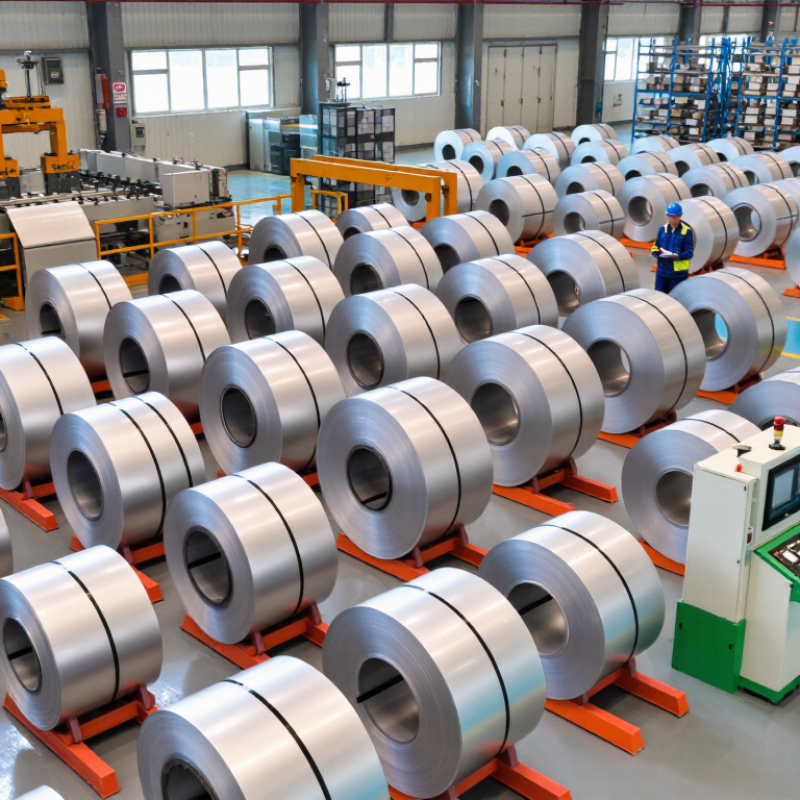
Start with the service environment, not the supplier’s catalog. State the medium, temperature, pressure, forming method, and expected service life. Grade selection follows these facts. For example, 304 may suit general indoor fabrication, while chloride exposure can require a more resistant grade. Nickel Institute guidance links alloy performance to chromium, nickel, and molybdenum content.
Specify thickness, width, coil weight, inside diameter, outside diameter, edge condition, and surface finish. Include realistic tolerances. An overly narrow tolerance can increase cost without improving production. ASTM A480 provides useful dimensional and finish references for stainless flat products.
Think about the next process. Will the coil be stamped, slit, laser-cut, or roll-formed? Define hardness, elongation, flatness, and burr limits when they affect tooling. Request a material test certificate, heat number, chemical analysis, mechanical results, and inspection records. Traceability matters.
The International Stainless Steel Forum reported 58.4 million tonnes of stainless crude steel production in 2023. That scale does not make every coil interchangeable. Regional availability, mill capacity, and alloy surcharges still influence quotations. World Steel Association data also shows changing steel demand conditions, so old budget assumptions may fail in 2026.
One detail is often missed: packaging. Set coil orientation, moisture protection, lifting points, labels, and maximum handling weight. I would also record one uncomfortable possibility: the first specification may be wrong. A trial coil, forming check, and revised tolerance can prevent a larger purchasing mistake.
Buying custom stainless steel coil in 2026 starts with selecting the right grade, not the lowest quote. The International Stainless Steel Forum reported global stainless crude steel production of about 60.2 million tonnes in 2023. That scale supports broad availability, but supply does not make every grade interchangeable.
Grade 304 suits many indoor, food-processing, and general fabrication applications. Grade 316 offers stronger resistance to chloride exposure, especially near saltwater. Grade 430 can reduce cost for decorative or moderately corrosive environments. The choice needs evidence. Ask for mill test certificates, chemical composition, tensile data, and heat numbers. ASTM A240 and EN 10088 provide useful reference points, but I would not treat standards as a complete buying decision.
Finish changes both appearance and performance. A 2B finish is smooth and practical for formed parts. BA provides a brighter surface. No. 4 supports a brushed appearance, but direction and roughness must be specified. Define thickness, width, coil inner diameter, outer diameter, edge condition, and tolerance in writing. ASTM A480 can guide dimensional and surface requirements. Request samples before approving a large coil. Small finish variations become obvious under strong warehouse lighting. I have seen “standard” specifications cause avoidable rework. That wording is too vague.
| Stainless Steel Grade | UNS Designation | Typical Chemistry (% by mass) | Typical Minimum Tensile Strength (MPa) | Typical Minimum Yield Strength (MPa) | Corrosion Resistance | Recommended Applications |
|---|---|---|---|---|---|---|
| 304 | S30400 | Cr 18.0–20.0; Ni 8.0–10.5; C ≤ 0.08 | 515 | 205 | Good general-purpose resistance; suitable for many indoor and mildly corrosive environments | Food equipment, kitchen panels, architectural trim, tanks, and general fabrication |
| 304L | S30403 | Cr 18.0–20.0; Ni 8.0–12.0; C ≤ 0.03 | 485 | 170 | Similar to 304, with lower carbon content for improved weld-area corrosion resistance | Welded structures, pressure vessels, piping, and fabricated assemblies |
| 316 | S31600 | Cr 16.0–18.0; Ni 10.0–14.0; Mo 2.0–3.0; C ≤ 0.08 | 515 | 205 | Better resistance to chlorides and many chemical environments than 304 | Marine hardware, chemical processing equipment, pharmaceutical equipment, and coastal construction |
| 316L | S31603 | Cr 16.0–18.0; Ni 10.0–15.0; Mo 2.0–3.0; C ≤ 0.03 | 485 | 170 | Very good chloride resistance and improved weldability compared with standard 316 | Welded marine, medical, food-processing, chemical, and clean-room components |
| 430 | S43000 | Cr 16.0–18.0; Ni generally not specified; C ≤ 0.12 | 450 | 205 | Moderate atmospheric and oxidation resistance; less resistant to chlorides than 304 or 316 | Appliance panels, automotive trim, indoor architectural parts, and cookware |
| 2205 Duplex | S32205 | Cr 22.0–23.0; Ni 4.5–6.5; Mo 3.0–3.5; N 0.14–0.20 | 620 | 450 | Excellent chloride and stress-corrosion-cracking resistance with high strength | Oil and gas equipment, pressure vessels, desalination, chemical tanks, and marine structures |
| Specification | Common Options | What to Confirm Before Ordering | Why It Matters |
|---|---|---|---|
| Thickness | Approximately 0.05–6.00 mm for many cold-rolled coil applications | Nominal thickness, permitted tolerance, and measurement method | Affects forming, weight, dimensional fit, and final product strength |
| Width | Mill width or slit width; custom widths may be available depending on equipment | Finished width, width tolerance, edge condition, and slit-burr limit | Controls material yield, downstream processing, and assembly accuracy |
| Coil Weight and Inside Diameter | Specified by handling equipment and the customer’s uncoiler | Maximum coil weight, inside diameter, outside diameter, and core requirements | Prevents incompatibility with lifting, storage, and production-line equipment |
| Surface Finish | 2B, BA, No. 1, No. 3, No. 4, No. 8, and brushed finishes | Finish designation, roughness target where required, protective film, and inspection standard | Determines appearance, cleanability, reflectivity, and post-processing requirements |
| Temper and Mechanical Condition | Annealed, skin-passed, quarter-hard, half-hard, or full-hard, where applicable | Yield strength, tensile strength, elongation, hardness, and forming requirements | Influences bendability, springback, stamping performance, and product durability |
| Edge Condition | Mill edge or slit edge | Edge type, burr height, camber, and edge-crack acceptance criteria | Affects operator safety, feeding reliability, and downstream cutting or forming |
| Packaging and Protection | Horizontal or vertical packing, moisture protection, paper interleaf, and surface film | Transport route, storage conditions, lifting method, labeling, and corrosion protection period | Reduces transit damage, water staining, scratches, and handling risk |
| Finish | Typical Production Route | Appearance and Characteristics | Typical Uses |
|---|---|---|---|
| 2B | Cold rolled, annealed, pickled, and lightly skin-passed | Smooth, relatively reflective general-purpose surface | Equipment, kitchenware, tanks, tubing, and general fabrication |
| BA | Bright annealed in a controlled atmosphere | Bright, highly reflective surface with reduced oxide scale | Decorative panels, appliances, automotive trim, and precision components |
| No. 1 | Hot rolled, annealed, and descaled | Dull, rougher surface designed primarily for function rather than appearance | Industrial equipment, structural parts, and high-temperature service |
| No. 4 | Mechanically polished, commonly with abrasive finishing | Uniform directional satin appearance; finish quality depends on grit and process control | Food-service equipment, elevators, architectural trim, and appliances |
| No. 8 | Progressive polishing to a mirror-like surface | Highly reflective decorative surface; requires careful handling to avoid scratches | Decorative architectural panels, display surfaces, and specialized interiors |
Technical note: Mechanical properties and chemical limits can vary with the governing standard, product form, thickness, and heat-treatment condition. Confirm the applicable specification, such as ASTM, EN, or JIS, and require a material test certificate for the final coil.
Buying custom stainless steel coil in 2026 requires more than comparing prices. Supplier evaluation should begin with traceable production records, recent mill audits, and clear communication. The International Stainless Steel Forum reported global crude stainless production of about 58.4 million tonnes in 2023. This scale creates choice, but also hides uneven quality. Ask for heat numbers, coil width tolerance, surface-grade records, and sample inspection results.
Certifications must match the application. Request material certificates under relevant ASTM or EN standards, plus ISO 9001 quality records. Food, medical, and architectural projects may require additional process controls. Pricing should separate base metal, nickel exposure, conversion fees, slitting, packaging, freight, and payment terms. A low quotation can exclude testing or edge protection. The OECD’s latest steel-capacity work also shows continuing global overcapacity concerns, so production claims deserve verification. Request monthly output, furnace schedules, and evidence of comparable coil orders. In my audits, capacity often looked impressive until delivery dates were tested.
Tips: Compare three written quotations. Fix the alloy, temper, finish, gauge, width, tolerance, and minimum order quantity. Use a small trial coil before signing a large contract. Check whether inspection occurs before shipment. I would not rely on certificates sent as detached PDFs alone. Match heat numbers to physical labels and packing photographs. One overlooked detail: ask how rejected coils are recorded. Suppliers that explain failures openly may be more reliable than those promising perfection.
Suggested procurement weighting for evaluating suppliers, certifications, pricing, and production capacity.
Use this 100-point model as a practical screening framework: verify grade, thickness, width, surface finish, tolerances, and test certificates; confirm relevant ISO management certifications and ASTM, EN, or GB material requirements; then compare total landed cost, minimum order quantity, lead time, and documented production capacity. The percentages are buyer-defined evaluation weights, not a ranking of any specific company.
Buying custom stainless steel coil in 2026 requires more than comparing price per tonne. World Stainless reported global stainless crude steel production of about 58.4 million tonnes in 2023. That scale creates many supply options, but variation in chemistry and processing remains significant. Specify the grade, thickness, width, coil weight, edge condition, surface finish, and inner diameter. Include permitted tolerances. Small omissions become expensive later.
Quality control should be written into the purchase order. Request heat numbers, a material test certificate under EN 10204 3.1, and positive material identification when the application is critical. Check thickness, width, flatness, tensile strength, hardness, surface defects, and weld repairs. ASTM or EN test methods should be named, not implied. Photographs help, but they cannot replace inspection records. I still leave room for correction.
Delivery terms need equal attention. UNCTAD’s Review of Maritime Transport reports that more than 80% of global merchandise trade moves by sea, so port delays can affect production schedules. Define the Incoterm, loading port, latest shipment date, partial-shipment rules, packaging standard, insurance responsibility, and document release timing. Add a realistic tolerance for transit disruption. A perfect forecast is impossible. Ask for weekly production updates and a pre-shipment inspection before the coil leaves the mill.
Buying a custom stainless steel coil in 2026 starts with a precise purchase order. State the grade, thickness, width, inner diameter, coil weight, surface finish, edge condition, and tolerance. Include the required quantity and delivery date. Small gaps in the specification can create expensive surprises.
Ask for a drawing, inspection plan, and sample approval before production begins. The order should identify the testing method and required documents, such as a material certificate and dimensional report.
Confirm packaging details too. Wooden supports, moisture protection, and clear coil labels reduce handling damage. Keep every revision in writing. Phone agreements are easily misunderstood.
When the coil arrives, inspect the packaging before unloading. Photograph crushed corners, water marks, broken bands, and tilted coils. Compare the label with your purchase order. Then measure the width and thickness at several points, not just one convenient location. Check the surface under bright, even light for scratches, stains, dents, or uneven polishing. Verify the coil weight and document the readings.
Do not rush acceptance.
If possible, use calibrated tools and record their identification numbers. Compare the certificate with the actual heat or batch marking. I have seen teams overlook a narrow width variation because the surface looked perfect. That mistake is avoidable, but inspections are still imperfect. Quarantine questionable material, notify the supplier promptly, and preserve photos, measurements, and packaging evidence before processing the coil.
Copyright © 2025 The Toolroom Inc. All Rights Reserved.
Website Design St Louis by IQComputing