
China’s top 10 Power Automat Transfer Switch manufacturers reflect a rapidly developing electrical equipment market. Their products support hospitals, data centers, factories, commercial buildings, and infrastructure projects. A reliable transfer switch must detect supply failure, start the backup source, and transfer loads within a controlled time.
Electrical engineer and transfer-switch specialist Keith Lane has stated, “Reliability is designed into the system, not added after installation.” This principle matters during real emergencies. A switching cabinet may stand quietly for years. Then, a storm can interrupt utility power within seconds. Contacts, controllers, interlocks, and communication modules must respond without hesitation.
This guide evaluates leading Chinese manufacturers through practical and technical criteria. These include product certifications, switching capacity, controller accuracy, enclosure quality, factory testing, after-sales support, and field experience. It also considers low-voltage and medium-voltage applications. Details matter. A hospital installation may require bypass isolation, generator coordination, and clear maintenance access. A factory may prioritize short transfer times and resistance to dust, vibration, and heat.
Not every manufacturer performs equally well. Some product pages provide limited test data. Others claim broad compatibility without explaining installation conditions. That deserves careful review. Buyers should request datasheets, test reports, warranty terms, and application references before choosing a supplier.
The ranking is not a substitute for engineering evaluation. Site conditions vary. Local codes, load characteristics, and backup-generation design can change the final decision. Still, these manufacturers offer a useful starting point for comparing technology, reliability, and long-term service value.
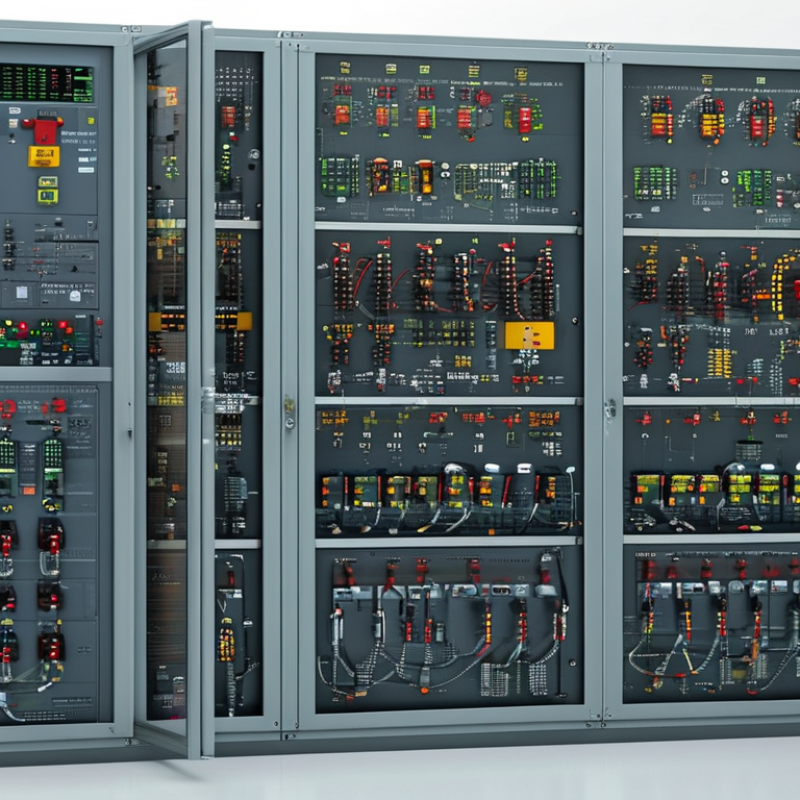
A power automatic transfer switch, or ATS, moves an electrical load between two power sources. It usually connects utility power to a generator, backup feeder, or battery system. When voltage or frequency falls outside preset limits, the controller detects the fault. It then opens the normal source and closes the standby source. The process happens without manual intervention.
Timing matters. NFPA 110 commonly requires emergency transfer equipment to restore power within 10 seconds for designated systems. The exact requirement depends on the installation and authority having jurisdiction. Uptime Institute’s 2024 Annual Outage Analysis reported that power-related problems caused 52% of impactful data-center outages. That figure shows why an ATS needs more than a fast switching action. It needs accurate sensing, mechanical interlocking, bypass capability, and regular testing.
A practical ATS installation includes cables, protective devices, control wiring, and a maintenance schedule. Technicians should test source availability, transfer delay, retransfer delay, and generator coordination. A poorly adjusted voltage threshold can create unnecessary transfers. That mistake is easy to overlook. However, switching during unstable voltage may stress motors, servers, and medical equipment. Designers also need to consider short-circuit ratings and local electrical codes. No ATS can repair an undersized generator or weak distribution system. I have seen specifications focus on transfer speed while ignoring neutral switching and grounding. That is an incomplete design.
Choosing among China’s top 10 power automatic transfer switch manufacturers requires more than comparing prices. Reliability begins with compliance. Verify IEC 60947-6-1 testing, rated short-circuit capacity, transfer time, and controller performance. Ask for factory test records, thermal-rise data, and evidence from installations with similar loads. In field projects, small details matter, such as terminal labeling, manual bypass access, and whether the controller remembers settings after power loss.
Power quality is becoming more demanding. The IEA’s Electricity 2024 report estimated that data centers used about 460 TWh globally in 2022, with demand potentially exceeding 1,000 TWh by 2026. This growth increases pressure on switching equipment. Uptime Institute research also identifies power issues as a major cause of data-center outages. Therefore, manufacturers should demonstrate stable operation during voltage dips, generator start delays, phase loss, and frequency variation. A low bid may look attractive, but that judgment is often too quick.
Tips: Compare complete lifecycle cost, not only purchase price. Review spare-part availability, firmware control, maintenance training, and response time. Request a witnessed transfer test using realistic load conditions. Check whether the supplier can provide local technical support and clear English documentation. No checklist is perfect. Independent inspection and reference calls still matter. Also, question impressive efficiency claims when test conditions are unclear.
This chart presents a normalized engineering evaluation framework for comparing power automatic transfer switch manufacturers. The criteria reflect common ATS purchasing requirements, including standards compliance, current capacity, switching performance, short-circuit withstand capability, monitoring functions, and long-term serviceability. The percentages are evaluation weights rather than manufacturer or brand performance data.
China’s top 10 power automatic transfer switch manufacturers deserve evaluation beyond factory scale. The IEA Electricity 2024 report expects global electricity demand to grow by about 4% annually through 2026. That growth increases pressure on hospitals, data centers, factories, and transport systems. Reliable transfer switches must respond quickly when utility power fails. They should also meet IEC 60947-6-1 requirements for transfer switching equipment. In site audits, engineers often check switching time, mechanical endurance, insulation distance, controller accuracy, and maintenance access. A polished brochure is not enough.
Tips: Request test records, wiring diagrams, temperature-rise data, and production traceability. Confirm whether testing covers the final assembled unit. Ask about generator compatibility and neutral switching. These details reveal practical engineering ability. MarketsandMarkets has reported steady growth in the automatic transfer switch market, supported by data-center expansion and distributed power systems. However, market forecasts vary by research method. Treat every percentage carefully.
A useful top-ten comparison should examine certifications, export experience, customization capacity, spare-part availability, and documented failure rates. Load categories matter too. A 400-amp industrial panel and a high-current emergency system cannot share the same assumptions. Some manufacturers offer strong pricing but limited after-sales support. That weakness can become expensive during a midnight outage. Rankings are never perfect. Procurement teams should inspect samples, witness factory acceptance testing, and verify actual project references before approval.
China Top 10 Power Automatic Transfer Switch Manufacturers: Product Capabilities and Industry Applications
China’s leading automatic transfer switch manufacturers serve data centers, hospitals, factories, telecom facilities, and commercial buildings. Their products commonly support 16A to 6,300A systems, with switching times ranging from several milliseconds to a few seconds. Configurations may include open transition, closed transition, bypass isolation, four-pole switching, and generator integration. These capabilities match rising power continuity needs. The International Energy Agency’s Electricity 2024 report expects global electricity demand to grow by an average of 3.4% annually through 2026.
Product selection should reflect the application, not only the rated current. A hospital may require source monitoring, mechanical interlocking, manual override, and clear fault alarms. A data center often needs redundant controllers, remote communication, and fast transfer performance. Industrial plants may prioritize short-circuit withstand ratings, dust protection, and frequent load testing. The Uptime Institute’s Global Data Center Survey has repeatedly identified power-related events as a major cause of serious outages, making maintenance access and test records especially important.
Specifications can mislead.
Field conditions remain decisive. Engineers should verify voltage, neutral configuration, generator behavior, ambient temperature, enclosure protection, and communication protocols before procurement. Some low-cost units appear capable on paper but offer limited diagnostic detail. That weakness deserves reflection. Reliable manufacturers usually provide type-test evidence, lifecycle data, wiring diagrams, and local technical support. IEC 60947-6-1 alignment also helps buyers compare transfer equipment through a recognized technical framework.
| Rank | Manufacturer Profile | Typical ATS Product Range | Rated Current | Rated Voltage | Transfer Technology | Control and Monitoring Capabilities | Applicable Standards | Typical Industry Applications |
|---|---|---|---|---|---|---|---|---|
| 01 | High-capacity power switching specialist | PC-class and CB-class automatic transfer switches; open and enclosed assemblies | 100–6,300 A | AC 400–690 V | Break-before-make transition; optional delayed transition; motor-driven switching mechanism | Utility/generator sensing, phase-loss detection, undervoltage and overvoltage protection, manual-auto selection | IEC 60947-6-1; IEC 60947-2; applicable CCC certification | Data centers, hospitals, airports, large commercial buildings, industrial plants |
| 02 | Industrial and generator integration specialist | Dual-power ATS panels, generator changeover systems, bypass-isolation configurations | 63–4,000 A | AC 380–690 V | Open transition; adjustable transfer and retransfer delay; generator start signal output | Three-phase voltage and frequency monitoring, emergency-stop input, remote test, RS-485 communication | IEC 60947-6-1; IEC 61439-1/-2 for assembled switchboards | Manufacturing facilities, telecom sites, emergency power rooms, logistics centers |
| 03 | Compact modular ATS manufacturer | Integrated PC-class ATS, modular panel units, DIN-rail control accessories | 16–630 A | AC 220–440 V | Fast open transition; electrically and mechanically interlocked switching | LED status indication, source availability display, phase-sequence monitoring, local manual override | IEC 60947-6-1; IEC 60529 enclosure protection options | Small commercial buildings, retail facilities, residential backup systems, small workshops |
| 04 | Critical-load power continuity specialist | High-speed ATS, bypass transfer equipment, maintenance-isolation systems | 100–3,200 A | AC 400–480 V | Open transition; optional in-phase transfer where compatible with the connected power sources | High/low voltage thresholds, frequency supervision, event logging, remote alarm contacts, communication gateway | IEC 60947-6-1; IEC 61439-1/-2; project-specific data-center requirements | Data centers, medical imaging centers, financial facilities, semiconductor production |
| 05 | Photovoltaic and microgrid transfer specialist | AC-coupled microgrid ATS, utility-generator ATS, energy-storage changeover panels | 40–1,600 A | AC 380–800 V | Open transition with configurable source priority; synchronization-ready control options | Grid-loss detection, frequency and phase monitoring, dry-contact control, Modbus communication | IEC 60947-6-1; IEC 61439-1/-2; local grid-connection requirements vary by project | Solar microgrids, energy-storage systems, remote facilities, low-carbon commercial buildings |
| 06 | Marine and transport power systems specialist | Compact enclosed ATS, vibration-resistant transfer panels, generator-to-load switching systems | 40–1,250 A | AC 220–690 V | Electrically operated open transition; manual emergency transfer facility | Source status indication, phase-failure protection, programmable delay timers, remote alarm output | IEC 60947-6-1; enclosure and installation requirements depend on marine or transport approval | Ports, vessels, rail facilities, tunnels, traffic control and transport infrastructure |
| 07 | Building-services and commercial distribution specialist | MCCB-based ATS, molded-case transfer assemblies, fire-pump and emergency-load panels | 100–1,600 A | AC 380–440 V | Break-before-make operation; adjustable transfer, retransfer and generator-start delays | Utility/emergency source indication, automatic/manual modes, fire-control interface, remote monitoring contacts | IEC 60947-6-1; IEC 61439-1/-2; local fire and building codes | Office buildings, shopping centers, hotels, schools, fire-pump and life-safety systems |
| 08 | Low-voltage distribution panel specialist | Fixed and withdrawable ATS panels, feeder transfer units, custom low-voltage switchboards | 250–5,000 A | AC 400–690 V | Mechanically interlocked circuit-breaker transfer; open transition with optional bypass arrangement | Digital metering, source health analysis, protection relay coordination, PLC or BMS interface | IEC 60947-6-1; IEC 61439-1/-2; IEC 60947-2 | Heavy industry, water treatment plants, mining, infrastructure and utility substations |
| 09 | OEM and customized enclosure specialist | Customer-specified ATS assemblies, stainless-steel enclosures, outdoor and harsh-environment configurations | 63–2,500 A | AC 220–690 V | Open transition; selectable transfer logic; customized source-priority sequences | Programmable controller, remote I/O, RS-485 or Ethernet options, customized alarm and metering functions | IEC 60947-6-1; IEC 61439-1/-2; enclosure rating selected according to installation conditions | Oil and gas support facilities, outdoor telecom, construction projects, process industries |
| 10 | Residential and light-commercial backup specialist | Miniature and molded-case ATS, single-phase and three-phase generator changeover units | 16–400 A | AC 220–400 V | Automatic open transition; utility-to-generator and generator-to-utility transfer | Basic source detection, adjustable delay, LED indicators, generator start/stop dry contacts | IEC 60947-6-1; IEC 61439-3 where applicable; national installation requirements | Homes, villas, small offices, convenience stores, rural backup and small generator systems |
A serious comparison starts with evidence, not catalogue rankings. Market reports estimate the global automatic transfer switch market at roughly USD 1.5 billion in 2023, with steady growth through 2030. Estimates vary by research firm. That uncertainty matters. Ask each Chinese supplier for audited production capacity, export records, and recent project references. The ISO Survey 2023 recorded more than 1.5 million ISO 9001 certificates worldwide, but certification alone proves little. Check whether the certificate covers the actual ATS factory. Visit the production line if the project is critical.
Technical evaluation should follow IEC 60947-6-1 requirements. Compare rated current, transfer time, short-circuit withstand, switching mechanism, controller accuracy, and manual override design. Request test reports with serial numbers and laboratory details. A useful test sample should show the cabinet, wiring terminals, controller screen, and load-transfer sequence. Do not accept vague claims such as “high reliability.” Measure them. Uptime Institute’s outage research repeatedly identifies power problems among major data-center outage causes, making transfer performance a financial issue, not merely a specification.
Price comparisons often miss the hidden costs. Review spare-part prices, firmware support, warranty exclusions, packaging, training, and response times. Ask for a five-year maintenance estimate. One supplier may offer a lower quotation but use unavailable contactors or proprietary controllers. That can delay repairs. I have seen procurement teams overvalue factory size and undervalue documentation. That was a mistake. Request a witnessed factory acceptance test, traceable components, and at least three comparable customer references before selecting a supplier.
Copyright © 2025 The Toolroom Inc. All Rights Reserved.
Website Design St Louis by IQComputing