
Blog

Best Compact UAV BMS Manufacturers in China

compact UAV BMS design begins with a tight set of constraints: low weight, limited space, and dependable battery monitoring. In a small aircraft, even a few extra grams matter. So does the heat around a densely packed battery. A Compact UAV BMS must monitor cell voltage and temperature while supporting suitable protection and communication functions.

Battery researcher Dr. Jeff Dahn’s published work focuses on lithium-ion batteries and their performance. The following is an editorial takeaway, not a direct quotation: “Battery reliability depends on careful measurement, sound design, and testing under real operating conditions.” That principle matters when comparing manufacturers in China. A product sheet alone cannot show how a board behaves under vibration, changing loads, or repeated charge cycles.

This overview examines manufacturers through practical questions: Can they document their testing? Do they explain cell-balancing methods, protection thresholds, and interface options? Can they adapt board dimensions to a compact airframe? Look for clear specifications, traceable quality processes, and support for integration. Ask for evidence, not promises.

Small boards. Serious trade-offs.

No single supplier fits every aircraft. Some buyers may prioritize a lighter design; others need richer telemetry or stronger customization. This guide compares those priorities without treating marketing claims as proof. One limitation remains: published information may not reveal long-term field performance. Readers should verify critical details directly with each manufacturer before selecting a Compact UAV BMS.
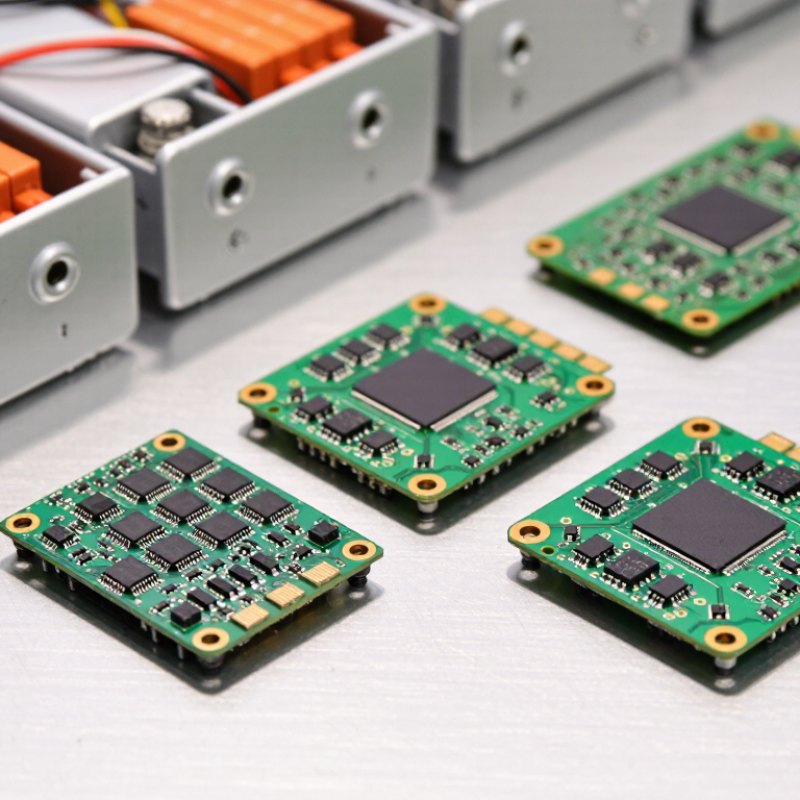
Best Compact UAV BMS Manufacturers in China

Understanding Compact UAV Battery Management Systems

Understanding Compact UAV Battery Management Systems

A compact UAV battery management system (BMS) monitors cell voltage, current, and temperature, then helps prevent unsafe charging or excessive discharge. It must do this without adding much weight or taking space from payloads. Small circuit boards, short wiring paths, and carefully placed temperature sensors matter. A sensor beside a warm power component may misread the cells. Details count.

The FAA’s 2024–2044 Aerospace Forecast projects growth in the U.S. commercial small-UAS fleet, increasing pressure for dependable battery monitoring across more flights. A compact BMS should provide cell balancing, clear fault reporting, and protection matched to the battery’s chemistry and configuration. Engineers should also check its limits under vibration and rapid current changes, not just on a bench. Heat builds quickly in a tight enclosure. That trade-off is easy to underestimate. Smaller does not always mean better: reducing board size can make heat dissipation and servicing harder. A real-world test can expose gaps that a tidy specification sheet misses.

Best Compact UAV BMS Manufacturers in China — Understanding Compact UAV Battery Management Systems Technical comparison of common design requirements for compact unmanned aerial vehicle battery management systems
Evaluation dimension Typical compact UAV BMS considerations Why it matters
Battery chemistry Lithium-ion and lithium-polymer packs are common in electric UAVs. The BMS must be configured for the selected cell chemistry and its specified voltage limits. Voltage thresholds, charging rules, and state-of-charge estimates depend on chemistry and cell specifications.
Series cell count Small UAV packs may use a range of series-connected cells; common configurations include 3S, 4S, 6S, and higher-voltage packs. The BMS must match the pack’s actual series count. Incorrect cell-count configuration can prevent accurate cell monitoring and safe pack operation.
Cell monitoring Per-cell voltage measurement is used to identify undervoltage, overvoltage, and cell imbalance. Temperature sensing is commonly added at relevant points in the pack. Pack-level voltage alone can conceal an individual cell that has reached an unsafe limit.
Current measurement Current sensing may use a shunt resistor or a Hall-effect sensor. Sensor range and accuracy should be selected for the UAV’s expected continuous and peak current. Current data supports overcurrent protection and improves charge, discharge, and remaining-capacity estimates.
Protection functions Typical protection includes cell overvoltage and undervoltage, charge and discharge overcurrent, short-circuit response, and overtemperature limits. Thresholds and response times should be set to the cell manufacturer’s specifications and the aircraft’s electrical design.
Cell balancing Passive balancing is a common, relatively simple approach; active balancing transfers energy between cells and can be considered where pack size or operating requirements justify added complexity. Balancing helps keep series-connected cells within a suitable voltage range over repeated charge and discharge cycles.
State estimation State of charge is commonly estimated using current integration, voltage information, and cell-specific calibration. State-of-health estimation may use accumulated operating data. Estimation quality depends on calibration, sensor accuracy, cell characteristics, and operating conditions.
Communications Common interfaces include UART, CAN, and SMBus/I²C-based connections, depending on the flight controller, battery interface, and system architecture. Confirm protocol, connector pinout, data format, and fault-reporting behavior before integration.
Size and mass Board outline, component height, connector placement, and cable routing should be designed around the available battery compartment and vibration environment. There is no universal “compact” size; acceptable dimensions and mass depend on the airframe and battery-pack design.
Operating environment Specify the required operating-temperature range and consider vibration, moisture exposure, insulation, and electrical-noise conditions in the aircraft. Environmental requirements affect component selection, enclosure design, sensing accuracy, and reliability.
Integration and validation Review the cell datasheet, wiring diagram, charge profile, firmware settings, and protection thresholds. Verify behavior with controlled tests before flight use. A BMS should be validated as part of the complete battery and aircraft system, rather than selected by size alone.

Note: This table describes general engineering considerations, not specifications for any particular manufacturer or product. Actual voltage, current, temperature, and protection limits must follow the selected cell datasheet and applicable system requirements.

Key Design Requirements for Compact UAV BMS Units

Compact UAV battery management system (BMS) units must balance protection, weight, and usable flight time. Every gram matters when a small airframe carries cameras, sensors, and wiring. The BMS should measure each cell’s voltage, pack current, and temperature with stable accuracy. A loose reading can trigger unnecessary shutdowns or hide a developing fault. Cell balancing also needs careful control, especially after repeated high-current flights.

Thermal design deserves close attention. A compact enclosure may sit beside warm motors or inside a poorly ventilated fuselage. Temperature sensors should contact the cell group, not merely the circuit board. Engineers should test cold starts, rapid climbs, vibration, and sudden throttle changes. Bench testing is not enough. A pack can behave perfectly on a worktable and fail during a sharp turn. That gap needs honest review.

Power consumption matters when the aircraft is stored or transported. The BMS should enter a low-power state without losing critical safety records. Clear fault codes, event logging, and dependable communication help technicians diagnose problems quickly. Protection should cover overvoltage, undervoltage, overcurrent, short circuits, and excessive temperature. The enclosure also needs secure connectors and resistance to dust and vibration. Some designs still prioritize a smaller board over easier servicing. That choice may save space, but it can increase repair time and inspection errors. Firmware validation, calibration records, and repeated production testing support dependable operation.

Overview of China’s Compact UAV BMS Manufacturers

China’s compact UAV BMS manufacturers are responding to smaller airframes, higher discharge rates, and stricter safety expectations. MarketsandMarkets projects the global drone market to reach about USD 58.4 billion by 2026, with commercial applications driving demand. This growth is increasing interest in lightweight battery management systems for inspection, mapping, agriculture, and emergency services.

Most Chinese suppliers focus on lithium battery packs from 2S to 12S configurations. Typical systems provide cell balancing, overcurrent protection, temperature monitoring, and CAN or UART communication. Better factories also perform aging tests, vibration checks, thermal cycling, and production traceability. The China Energy Storage Alliance has repeatedly highlighted safety management and battery consistency as major priorities in lithium battery development. However, published specifications can be incomplete. Buyers should verify actual test records, not only brochure values.

Tips: Ask for data at real flight loads. A 30-amp laboratory test may not represent a cold morning climb. Check balancing speed, sensor accuracy, firmware update control, and protection recovery settings. Confirm transport documentation and battery testing requirements before shipment. Small errors matter.

From practical evaluation, compact UAV BMS selection should match propeller load, battery chemistry, flight duration, and operating altitude. A lighter board may improve payload capacity, but weaker thermal design can shorten service life. This trade-off is often underestimated. Some manufacturers offer customization, including connector layout, enclosure size, and communication protocols. Independent validation remains valuable because reported cycle life may change under different discharge rates, temperatures, and storage conditions.

How to Evaluate UAV BMS Manufacturers and Products

Evaluating a compact UAV BMS manufacturer starts with evidence, not a polished brochure. Ask for cell-count limits, continuous current ratings, peak duration, and balancing accuracy. A credible supplier should provide test records from real flight packs. Look for thermal chambers, vibration fixtures, and controlled charge-discharge equipment. Tiny details matter. I once found a current rating that applied only for ten seconds. That distinction could change a design decision.

Study the BMS architecture before comparing prices. Check voltage measurement tolerance, temperature sensor placement, short-circuit protection, and sleep-mode consumption. For a small UAV, every gram and milliwatt affects endurance. Confirm whether the board supports passive or active balancing. Request data from cold starts, rapid climbs, and repeated landing cycles. Firmware update control also deserves attention. Ask how versions are approved, recorded, and restored after a failed update. Manufacturers with traceable components and documented change control are easier to trust.

Product evaluation should include integration, not just bench performance. Test the BMS with your exact cells, connectors, charger, and flight controller. Inspect logs for voltage drift, false alarms, and delayed fault responses. A useful supplier will explain failures without hiding behind average figures. Check warranty terms, sample availability, calibration methods, and engineering response times. Independent inspection can reveal weaknesses. Numbers can mislead. Do not accept every laboratory claim immediately. Some specifications remain unclear until the pack heats, ages, or experiences vibration. Pilot testing should use several production samples, because one excellent unit proves very little.

These illustrative weights provide a practical framework for evaluating compact UAV BMS products and manufacturers; they are not measured results or a ranking. Prioritize cell monitoring and protection, then verify performance against the battery chemistry, pack configuration, flight profile, and applicable safety requirements.

Applications and Selection Considerations for UAV BMS Solutions

Compact UAV BMS solutions serve inspection quadcopters, agricultural aircraft, and fixed-wing mapping platforms. Each application places different demands on battery protection. A hovering quadcopter may draw sharp current peaks during takeoff, while a mapping UAV needs stable voltage across longer flights. The BMS should monitor cell voltage, pack temperature, current, and state of charge, then communicate clearly with the flight controller. Fortune Business Insights estimated the global drone market at USD 30.6 billion in 2022 and projected a 13.9% CAGR from 2023 to 2030. That expansion increases demand for dependable power systems, but market growth alone does not prove a particular design is suitable.

For selection, match continuous and peak discharge ratings to measured flight loads, not brochure claims. Check cell-balancing performance, low-temperature behavior, vibration tolerance, telemetry protocols, and protection against overcurrent and undervoltage. Ask suppliers for test conditions and fault-response records. A compact board can save space, yet poor thermal paths may create hot spots beside tightly packed cells. Small details matter.

Tips: Test the BMS with the actual battery pack and flight profile. Log current and temperature during repeated climbs, hovering, and landing. Compare results across packs; one test is not enough. Also confirm that a safe shutdown will not cause an abrupt loss of control. That trade-off deserves careful review.

Copyright © 2025 The Toolroom Inc. All Rights Reserved.
Website Design St Louis by IQComputing