
Choosing among the top Deep Boring Machine manufacturers worldwide requires more than comparing catalog photographs. A reliable evaluation must examine boring diameter, maximum depth, spindle torque, guideway rigidity, thermal stability, and control accuracy. These details decide whether a machine can produce a straight, clean bore inside a hydraulic cylinder, turbine shaft, or large steel component.
Dr. Alexander H. Slocum, a respected authority in precision machine-tool design, offers a useful reminder: “The machine tool is the mother of all machines.” His point remains relevant. A Deep Boring Machine is not merely a large drill. It is a coordinated system of structure, cutting tools, coolant delivery, measurement, and operator judgment. Even a powerful spindle can fail when vibration appears near the bore bottom. Small alignment errors may become visible as taper, chatter marks, or uneven wall thickness.
This guide compares leading manufacturers through practical evidence. It considers machine capability, customization, automation, after-sales support, spare-parts access, and performance in demanding production environments. Global reputation matters, but it can mislead. A famous brand may not suit every workpiece, factory layout, or budget. No ranking is perfect. That deserves attention.
Real buying decisions often depend on overlooked details. Can the supplier support a 6,000-millimeter boring depth? Is probing available? How quickly can technicians respond? These questions reveal more than a polished brochure. The strongest manufacturers combine engineering depth with dependable service, measurable accuracy, and a clear understanding of each customer’s process.
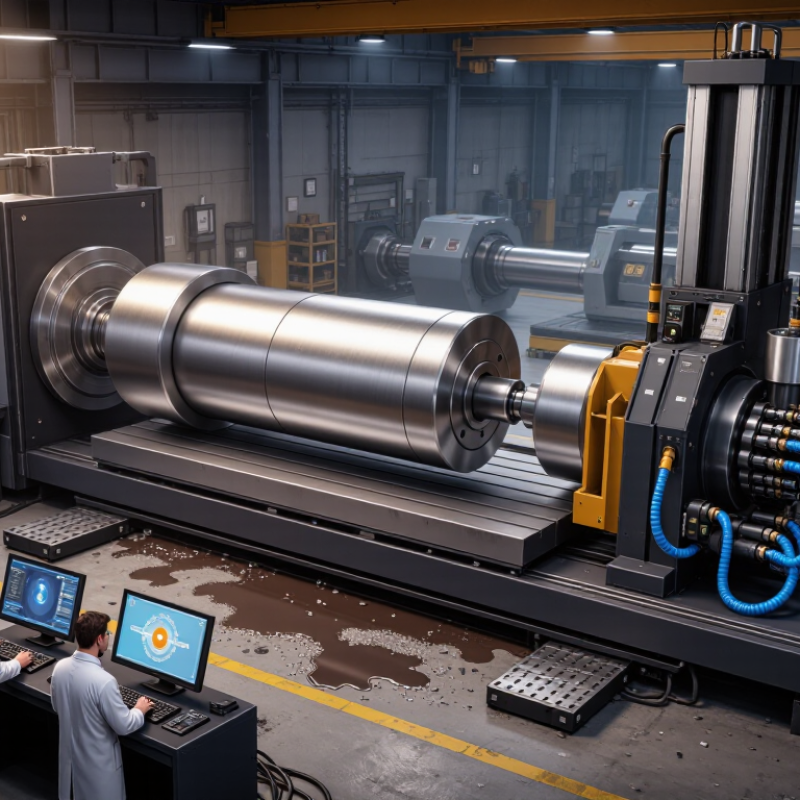
A deep boring machine enlarges, straightens, or finishes a long internal hole. It works inside a pre-drilled passage. The cutting tool travels through the workpiece while a rigid boring bar controls alignment. Common systems include horizontal boring, BTA boring, and gun boring equipment.
The process suits hydraulic cylinders, energy components, molds, and large shafts. Operators monitor cutting pressure, coolant flow, vibration, and chip removal. A small alignment error can create a tapered hole several meters long. That detail is easy to underestimate.
The 2024 Grand View Research machine tools report estimated the global machine tools market at roughly US$83 billion in 2023. CNC equipment represented a major share of that demand. Industry reports from Fortune Business Insights also forecast continued growth in CNC machining through the decade. However, these figures combine milling, turning, drilling, and boring equipment. They do not isolate deep boring machines. That limitation matters when comparing suppliers.
In practice, a reliable machine needs more than high spindle power. Bed stiffness, bar support, coolant filtration, and measurement feedback affect final accuracy. Experienced users often request test boring with their own material. That is sensible. Catalog accuracy can look impressive, yet real results may change with steel grade, hole depth, and tool geometry. A careful buyer should inspect repeatability records, service response, and published test conditions before ranking any manufacturer.
Top Deep Boring Machine Manufacturers Worldwide?
Deep boring machines create accurate internal holes in long, heavy, or irregular components. Their key feature is rigidity. A reinforced bed reduces vibration during extended cutting. Servo-controlled boring bars improve diameter consistency and surface quality. Automatic tool changers can reduce setup time, especially during repeated production runs. In demanding workshops, coolant delivery matters too. It controls heat, clears chips, and protects the cutting edge.
These machines serve energy, construction, transportation, and general engineering applications. They can finish turbine housings, hydraulic cylinders, axle bodies, and large steel sleeves. Deep boring is also useful when a standard drilling process cannot maintain straightness. Operators should examine spindle power, maximum boring depth, workpiece capacity, and measurement systems before purchasing. A practical trial with real material is more trustworthy than a brochure. Machine performance may change with tool wear, operator skill, and unstable foundations.
Tips: Check alignment before production. Use calibrated gauges and record bore measurements at several depths. Select cutting tools according to hardness, material structure, and required finish. Keep coolant clean, but do not assume more flow always improves results. Poor chip control can still damage a carefully machined bore. No machine is perfect. Teams should review vibration, cycle time, and rejected parts after installation. That feedback often reveals overlooked costs and better process settings.
Leading deep boring machine manufacturers worldwide combine heavy engineering with careful process control. Their equipment is designed for long, narrow holes in hydraulic cylinders, energy components, molds, and precision shafts. A reliable manufacturer usually offers machines with rigid beds, vibration control, automatic tool guidance, and stable coolant systems. These features matter when boring depths exceed several meters.
Experienced manufacturers do more than sell a machine. They study the workpiece material, hole diameter, depth-to-diameter ratio, and required surface finish. Technical teams may recommend gun drilling, BTA boring, or trepanning methods after reviewing production data. Factory acceptance tests should check alignment, spindle behavior, chip removal, and dimensional repeatability. Clear training and responsive service also reduce costly downtime.
No supplier is flawless. Published specifications can look impressive but may not reflect real cutting conditions. Buyers should request sample results, inspection records, and references from comparable workshops. I would also examine maintenance access, spare-part availability, software support, and operator safety features. Small details matter: a poorly positioned coolant line can affect chip evacuation, while weak documentation can delay commissioning. The best manufacturers remain open about these limitations and adjust designs after listening to machinists. Their credibility grows through measurable results, not polished claims.
| Evaluation Dimension | Industry Data or Typical Range | Why It Matters When Selecting a Manufacturer | Recommended Verification Point |
|---|---|---|---|
| Primary Machine Categories | Gun drilling, BTA drilling, ejector drilling, deep-hole boring, trepanning, and counterboring systems. | Different processes are suited to different hole diameters, depths, materials, and production volumes. | Match the proposed process with the required hole geometry, tolerance, surface finish, and workpiece material. |
| Typical Depth-to-Diameter Ratio | Deep-hole machining is generally associated with hole depths exceeding approximately 10 times the hole diameter; specialized systems can exceed 100 times diameter. | The ratio strongly affects tool deflection, chip evacuation, coolant delivery, and machine rigidity requirements. | Request documented test results using a workpiece with a comparable depth-to-diameter ratio. |
| Common Hole Diameter Capability | Small gun-drilling systems commonly address sub-10 mm holes, while BTA, boring, and trepanning systems are used for medium to very large diameters, often above 100 mm. | A machine optimized for small precision holes may not be suitable for large-diameter boring or heavy material removal. | Confirm the minimum and maximum supported diameters for the exact tool system, not only the machine bed size. |
| Boring Accuracy | Achievable accuracy depends on machine rigidity, tool condition, material, coolant control, setup, and finishing operations; precision applications may require micron-level control. | Published positioning accuracy alone does not guarantee finished-hole accuracy. | Require a sample inspection report covering diameter, straightness, roundness, cylindricity, and surface finish. |
| Coolant and Chip Evacuation | Deep-hole drilling commonly uses high-pressure cutting fluid, filtration, chip separation, and controlled coolant temperature. | Reliable chip evacuation reduces tool breakage, scoring, thermal distortion, and bore blockage. | Check pump pressure, flow rate, filtration rating, tank capacity, temperature control, and chip-conveyor design. |
| Workpiece Size and Load | Machine configurations range from compact single-spindle units to large horizontal systems with long beds, steady rests, and high load capacity. | The workpiece envelope determines bed length, spindle height, chuck capacity, support arrangement, and installation requirements. | Compare maximum workpiece length, diameter, weight, spindle center height, and supported loading method. |
| Automation and Control | Modern systems may include CNC control, automatic tool changing, in-process monitoring, probing, load sensing, and production data collection. | Automation improves repeatability and reduces setup time in medium- and high-volume production. | Verify control functions, tool-management capacity, sensor integration, remote diagnostics, and operator training. |
| Typical Applications | Hydraulic cylinders, injection molds, engine and transmission components, aerospace parts, energy equipment, landing-gear components, and oilfield tools. | Application experience helps determine suitable tooling, fixturing, coolant strategy, and inspection methods. | Ask for anonymized case studies involving comparable materials, dimensions, tolerances, and production volumes. |
| Manufacturing Regions Commonly Associated with Machine-Tool Supply | Europe, East Asia, North America, and South Asia contain established machine-tool and precision-engineering production centers. | Regional availability can affect lead time, spare-parts logistics, technical support, compliance documentation, and total ownership cost. | Evaluate local service coverage, spare-parts response time, installation support, and applicable electrical and safety standards. |
| Total Cost of Ownership | Total cost includes machine price, tooling, coolant and filtration equipment, energy use, maintenance, calibration, operator training, and downtime. | A lower purchase price can result in higher operating costs if consumables, service, or process stability are inadequate. | Request a five-year cost estimate based on expected annual operating hours and production volume. |
Comparing deep boring machine manufacturers requires more than checking maximum drilling depth. Experienced buyers examine spindle torque, boring diameter, vibration control, and positional accuracy. A machine may reach extreme depths but lose stability in hard, fractured rock. That weakness can increase tool wear and rework. Ask manufacturers for verified test data, not only catalog claims. Review sample bore records, tolerance results, and maintenance intervals. Reliable suppliers also explain how their machines perform in confined workshops, uneven ground, and changing temperatures.
Tips: Compare complete operating costs, including tooling, energy use, training, and service response. Inspect the control system personally if possible. Clear screens and simple alarms reduce operator errors. Check whether replacement parts are available locally. A low purchase price can become expensive after one neglected breakdown.
Manufacturer quality also appears in engineering support. Strong companies provide foundation guidance, commissioning assistance, and practical operator training. They should discuss dust removal, coolant management, emergency stops, and inspection routines without avoiding difficult questions. Ask how they handle custom diameters or unusual material conditions. Some specifications look impressive, yet field performance can differ. I would request a supervised demonstration before signing a major order. Even then, one test cannot represent every site. Comparing references from similar geological conditions gives a more honest view. Reliability is built through evidence, response time, and consistent after-sales care.
Choosing a deep boring machine manufacturer requires more than comparing spindle power. Gardner Intelligence’s 2024 World Machine Tool Survey reported global machine-tool consumption near 83 billion dollars in 2023, showing how competitive this sector has become. Yet market size does not prove engineering quality. Ask for verified boring depths, diameter ranges, repeatability records, and material trials. ISO 230-2 testing should support positioning claims. A polished brochure is not proof.
Service capability matters just as much as machine design. Check installation support, operator training, spare-part availability, and remote diagnostics. Deloitte’s manufacturing surveys continue to identify skills shortages and unplanned downtime as major operational risks. Therefore, a supplier should explain how quickly technicians respond and how failures are documented. Request a factory acceptance test using your actual workpiece, tooling, coolant, and inspection method. Small omissions can become expensive lessons.
Tips: Compare total ownership cost, not the purchase price. Review three customer references with similar hole depths and materials. Inspect calibration certificates and software update policies. Ask how the machine handles chip evacuation at full depth. Also, challenge optimistic cycle-time estimates; real production often includes tool changes, cleaning, measurement, and setup variation. Leave room for doubt. That is often where better decisions begin.
A practical 100-point procurement scorecard for comparing deep boring machine manufacturers without ranking individual companies or brands.
Total cost of ownership and after-sales support typically deserve the greatest attention because machine uptime, maintenance access, spare-parts availability, and operating costs directly affect project profitability. Capacity, accuracy, safety compliance, and delivery capability should then be matched to the required hole diameter, boring depth, ground conditions, and project schedule.
Copyright © 2025 The Toolroom Inc. All Rights Reserved.
Website Design St Louis by IQComputing